
Appliance grease builds up quietly, but over time it becomes one of the most stubborn and overlooked issues in a home kitchen. From ovens and hobs to extractor fans and grills, layers of oil and carbonised residue can affect performance, hygiene, and even safety. That is why more homeowners are now turning to specialist support such as the service offered by Oven Cleaning Colchester when standard household cleaning methods stop being effective.
Professional appliance degreasing is no longer seen as an occasional luxury. In many Colchester homes, it has become part of maintaining a healthier kitchen environment, improving energy efficiency, and extending the life of expensive appliances. With modern cooking habits involving more roasting, frying, and high-fat ingredients, grease accumulates faster than most people realise. Once it hardens, it becomes extremely difficult to remove without specialist equipment and techniques.
This article explores why professional appliance degreasing services are becoming increasingly popular among homeowners in Colchester, what the process involves, and why it often delivers far better results than standard DIY cleaning.
Understanding Professional Appliance Degreasing Services in Colchester
Professional appliance degreasing is a deep-cleaning process designed to remove built-up fats, oils, and carbon deposits from kitchen appliances. Unlike surface cleaning, it targets internal and hidden components where grease tends to accumulate over time.
What degreasing actually involves
Degreasing goes beyond wiping visible surfaces. It includes breaking down hardened grease layers using specialist solutions, safe dismantling of removable components, and thorough cleaning of internal areas that are usually inaccessible during routine household cleaning.
The process typically focuses on:
- Burners and hob surfaces
- Oven cavities and fan systems
- Extractor fans and filters
- Grill pans and trays
- Internal door glass layers
Types of appliances that benefit most
Not every appliance shows visible grease, but many still suffer from internal build-up.
Common examples include:
- Built-in ovens used for roasting and baking
- Gas and electric hobs with frequent frying use
- Cooker hoods and extractor systems
- Combination ovens in busy households
- Range cookers in larger kitchens
Grease accumulation is especially common in homes where cooking is frequent, high-temperature, or involves oil-heavy ingredients.
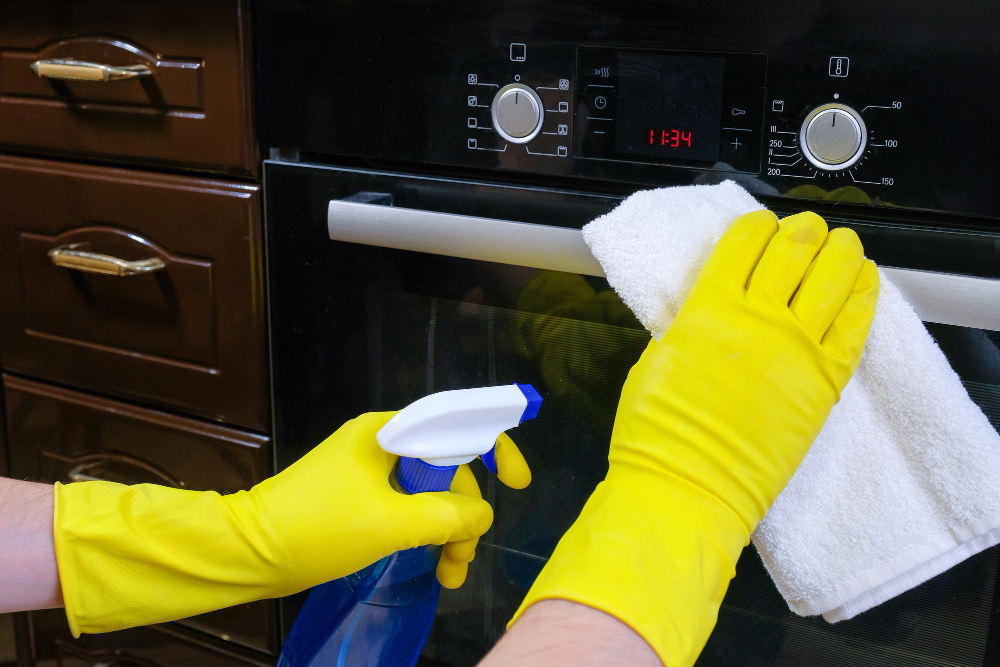
Why Grease Buildup Is a Bigger Problem Than Homeowners Realise
Most homeowners notice grease only when it becomes visible or starts affecting cooking performance. However, by the time it is obvious, it has often already caused deeper issues inside the appliance.
Hygiene and food safety concerns
Old grease is not just unsightly. It can become a breeding ground for bacteria when exposed to heat and moisture repeatedly. Over time, it may also transfer unpleasant odours into food during cooking.
In severe cases, carbonised grease flakes can fall onto food surfaces, creating hygiene concerns that are not immediately visible.
Impact on efficiency and performance
A grease-coated appliance works harder than a clean one. Heat distribution becomes uneven, fans struggle to circulate air properly, and cooking times can increase without the user realising why.
For example:
- Ovens take longer to preheat
- Food cooks unevenly
- Extractor fans lose suction power
- Hobs burn fuel less efficiently
Fire risk and safety issues
One of the most serious risks is the potential for grease ignition. Built-up fat in extractor systems or oven cavities can ignite at high temperatures, particularly in older appliances or those used heavily for frying.
While rare, this is one of the key reasons professionals recommend periodic deep degreasing rather than relying solely on surface cleaning.
Why Homeowners Are Turning to Professional Services
As kitchens become more central to daily living, homeowners are placing more importance on cleanliness, efficiency, and safety. This has led to a rise in demand for specialist appliance care.
Time-saving benefits
Degreasing an appliance properly can take several hours, especially if buildup is severe. Professional services remove this burden entirely, allowing homeowners to avoid:
- Soaking and scrubbing trays
- Scraping burnt-on residue
- Repeated cleaning attempts
- Disassembly and reassembly risks
Access to specialist cleaning systems
Professional degreasing uses industrial-grade, non-abrasive cleaning agents designed to break down hardened grease without damaging appliance surfaces. These solutions are significantly more effective than household sprays or supermarket cleaners.
In many cases, technicians also use dip tanks or controlled heat systems to soften deposits before removal.
Safety and handling expertise
Modern appliances often include sensitive components such as thermostats, fans, and electronic controls. Incorrect cleaning can damage these parts or reduce performance.
Professionals are trained to:
- Safely remove panels and internal parts
- Avoid water damage to electrical components
- Reassemble appliances correctly
- Test functionality after cleaning
What Professional Appliance Degreasing Includes
The process varies slightly depending on appliance type, but most professional services follow a structured approach.
Initial inspection and assessment
Before cleaning begins, the appliance is assessed to determine:
- Level of grease buildup
- Type of residues present
- Any signs of damage or wear
- Safe dismantling points
Controlled dismantling of removable parts
Non-permanent components such as racks, trays, and filters are carefully removed. These parts often require separate soaking or immersion cleaning to fully break down grease layers.
Deep degreasing process
This is the core stage of the service. It may involve:
- Application of specialist degreasing solutions
- Soaking of removable parts
- Steam or heat-assisted cleaning methods
- Manual removal of carbon deposits
Reassembly and functional testing
Once cleaning is complete, all components are reassembled and tested to ensure:
- Proper heating and airflow
- Safe electrical operation
- Correct alignment of internal parts
Appliances Commonly Included in Degreasing Services
Different appliances accumulate grease in different ways. The table below outlines typical problem areas and why they require attention.
| Appliance Type | Common Grease Issues | Impact on Performance |
|---|---|---|
| Built-in ovens | Carbon build-up on walls and fans | Uneven cooking and longer heating times |
| Hobs (gas/electric) | Burnt oil around burners and rings | Reduced heat efficiency |
| Extractor hoods | Sticky filters and internal duct residue | Poor air circulation and odours |
| Grill compartments | Hardened fat deposits | Smoke and flare-ups during cooking |
| Oven doors | Layered grease between glass panels | Reduced visibility and hygiene concerns |
DIY Cleaning vs Professional Degreasing
Many homeowners attempt to manage grease themselves using household products. While this can help with light maintenance, it rarely matches the effectiveness of a professional service.
| Factor | DIY Cleaning | Professional Degreasing |
|---|---|---|
| Cleaning depth | Surface-level only | Internal and external deep cleaning |
| Time required | Several hours per appliance | Typically 1–2 hours per appliance |
| Equipment used | Household products | Specialist degreasers and tools |
| Safety considerations | Risk of damage or incomplete cleaning | Trained handling of components |
| Results longevity | Short-term improvement | Longer-lasting cleanliness |
Cost Expectations for Professional Degreasing in Colchester
Professional appliance degreasing is generally positioned as a premium service due to the level of detail and time involved. Costs vary depending on appliance size, condition, and level of grease build-up.
| Service Type | Typical Price Range (GBP) |
|---|---|
| Single oven degreasing | £70 – £120 |
| Double oven cleaning | £100 – £160 |
| Hob degreasing | £40 – £80 |
| Extractor cleaning | £60 – £130 |
| Full kitchen package | £180 – £350 |
In more heavily soiled appliances, particularly those that have not been cleaned for long periods, prices may sit at the higher end of the scale due to the additional labour and specialist treatment required.
Signs That an Appliance Needs Professional Degreasing
Grease build-up is not always immediately visible, but there are clear warning signs homeowners can look out for.
Performance-related signs
- Food takes longer to cook than usual
- Uneven heating inside the oven
- Reduced airflow from extractor fans
- Smoke appearing during normal cooking
Visual and physical indicators
- Brown or black residue inside the oven
- Sticky or greasy surfaces that return quickly after cleaning
- Foggy or stained oven glass
- Visible build-up around hob burners
Odour and air quality changes
- Persistent burnt smell during cooking
- Lingering kitchen odours after ventilation
- Greasy smell even when appliances are off
Long-Term Benefits of Regular Professional Degreasing
Regular deep cleaning is not just about appearance. It plays a role in maintaining appliance performance, safety, and kitchen comfort over time.
Improved appliance lifespan
Grease and carbon deposits can strain internal components, particularly fans and heating elements. Removing these residues reduces wear and helps appliances last longer before requiring replacement.
Better energy efficiency
Clean appliances heat faster and distribute energy more evenly. This means less power is needed to achieve the same cooking results, which can gradually reduce household energy usage.
Healthier cooking environment
Reducing grease build-up helps minimise airborne particles, unpleasant odours, and potential contamination during food preparation.
More consistent cooking results
A clean oven or hob performs more predictably, helping homeowners achieve better and more consistent results with everyday meals.
What Defines a High-Quality Appliance Degreasing Service
Not all cleaning services deliver the same level of detail. High-quality providers focus on precision, safety, and thoroughness rather than just surface improvement.
Key characteristics include:
- Careful inspection before cleaning begins
- Use of specialist degreasing agents suited to different materials
- Safe dismantling and reassembly of components
- Attention to internal areas often missed in standard cleaning
- Testing appliances after completion to ensure full functionality
In Colchester, demand continues to grow for services that go beyond basic cleaning and deliver a more complete restoration of appliance performance, particularly in households where cooking is frequent and appliances are heavily used.
Frequently Asked Questions About Professional Appliance Degreasing in Colchester
What exactly is appliance degreasing and how is it different from a normal clean?
Appliance degreasing is a deep restoration process that targets hardened grease, carbon deposits, and built-up cooking residue inside and outside kitchen appliances. A standard clean usually focuses on visible surfaces like oven doors, trays, or hob tops. Degreasing goes much further.
Professionals break down layers of grease that have built up over months or even years. This includes internal oven walls, fan covers, hidden seals, and extractor components that are rarely touched during routine cleaning. The aim is not just to make the appliance look clean, but to restore its performance and reduce strain on internal parts.
The difference becomes obvious in older or heavily used kitchens where normal cleaning products no longer make an impact on burnt-on residue.
How often should appliances be professionally degreased?
There is no strict rule, but most homes benefit from professional degreasing every 6 to 12 months. The exact timing depends on how often the kitchen is used and the type of cooking being done.
Homes that cook daily, especially those using oils, roasting, or frying regularly, tend to build up grease much faster. In these cases, annual cleaning is usually not enough to maintain peak performance.
On the other hand, lighter-use kitchens may stretch closer to the 12-month mark without noticeable issues. However, waiting too long often leads to thicker, harder deposits that take longer to remove and may cost more to clean.
Can professional degreasing remove all burnt-on grease?
In most cases, yes, but it depends on how long the residue has been left to build up. Fresh or moderate grease deposits are usually removed completely during a single visit. Older carbonised layers can take more time and multiple treatment stages.
Very old grease that has been repeatedly baked onto surfaces over years may leave slight staining, even after deep cleaning. However, this is usually cosmetic rather than functional. The important improvement is in heat performance, hygiene, and safety rather than appearance alone.
Is appliance degreasing safe for all types of ovens and hobs?
Yes, when carried out by trained professionals. Modern appliances are designed with materials that can withstand specialist cleaning products and methods. However, the process must be handled carefully, especially with electrical components and glass panels.
Different appliances require different approaches:
- Fan ovens need careful cleaning around internal motors and blades
- Gas hobs require attention around burners and ignition points
- Ceramic hobs need non-abrasive treatment to avoid scratching
- Range cookers may require partial dismantling due to multiple compartments
Professional technicians understand these differences and adjust their methods accordingly to avoid damage.
Will degreasing improve how my oven cooks food?
Yes, in many cases the improvement is noticeable. Grease build-up can affect how heat circulates inside the oven, leading to uneven cooking or longer preheating times. Once these layers are removed, heat distribution becomes more consistent.
Food often cooks more evenly, and temperatures stabilise more effectively. You may also find that cooking times return to what they were when the appliance was newer.
This is particularly noticeable in ovens with fan systems, where airflow is critical for even heat distribution.
Does professional degreasing help reduce cooking smells?
It does. Lingering cooking smells are often caused by grease trapped inside the appliance or extractor system. When heated repeatedly, these residues release odours that can spread through the kitchen.
Deep degreasing removes the source of these smells rather than just masking them. Extractor fans, in particular, benefit significantly from this process, as grease trapped in filters and ducts is a major cause of persistent kitchen odours.
Once cleaned properly, kitchens tend to feel fresher almost immediately after cooking.
Is it worth cleaning an old appliance or should it just be replaced?
In many cases, degreasing can extend the usable life of an appliance by several years. If the appliance is heating properly and all components are functioning, deep cleaning can restore performance without the cost of replacement.
Replacement is usually only necessary when there are mechanical or electrical faults that cannot be repaired, such as:
- Broken heating elements
- Faulty thermostats
- Damaged fan motors
- Electrical failures
If the issue is mainly grease build-up, cleaning is almost always the more cost-effective option.
How long does a full degreasing service usually take?
Time varies depending on the appliance and the level of build-up. A lightly used oven may take around an hour, while heavily soiled appliances can take significantly longer.
A typical breakdown looks like this:
- Single oven: around 1 to 2 hours
- Double oven: up to 2.5 hours
- Range cooker: 2 to 4 hours depending on size
- Extractor hood: 45 minutes to 1.5 hours
If multiple appliances are being cleaned in one visit, the total time will increase accordingly.
Will there be any strong chemical smells during the cleaning process?
Most professional degreasing products are designed to be low odour and safe for indoor use. While there may be a mild cleaning smell during the process, it is not usually strong or long-lasting.
Once the appliance is rinsed, reassembled, and tested, any residual scent tends to disappear quickly. Good ventilation during and after cleaning helps speed this up.
Can I use my appliances immediately after degreasing?
Yes, once the technician has completed the cleaning, reassembled all parts, and tested the appliance, it is safe to use straight away.
In fact, many homeowners notice improved performance immediately after the first use. The oven heats more evenly, extractor fans run more efficiently, and there is often a noticeable reduction in lingering cooking smells.
What areas of an appliance are most commonly missed during DIY cleaning?
There are several areas that are difficult to reach without dismantling parts of the appliance. These are often the main sources of hidden grease build-up:
- Behind oven fan covers
- Between layers of oven door glass
- Inside extractor fan housings
- Around burner bases on gas hobs
- Under removable seals and trims
These areas are rarely cleaned properly during standard household cleaning, which is why grease often returns quickly even after a thorough wipe-down.
Is professional degreasing messy or disruptive?
The process is designed to be as contained as possible. Most of the work is done within the appliance itself or on removable parts that are cleaned separately. Protective sheets are usually used around the work area to prevent any mess.
There is some level of disruption simply because appliances are temporarily out of use, but this is typically short-lived. Once cleaning is complete, everything is reassembled and ready to use the same day.
Does degreasing help with energy efficiency?
Yes, and this is one of the most overlooked benefits. When grease builds up inside ovens or around heating elements, appliances need more energy to reach and maintain temperature.
After a deep clean:
- Ovens heat up faster
- Fans circulate air more efficiently
- Cooking temperatures stabilise more quickly
Over time, this can reduce unnecessary energy use, particularly in homes where cooking is frequent.
What happens if grease is left untreated for too long?
If grease is not removed regularly, it hardens and turns into carbon deposits. These are far more difficult to remove and may eventually affect appliance performance.
Long-term neglect can lead to:
- Reduced heating efficiency
- Persistent burning smells
- Smoke during cooking
- Damage to internal components
- Increased fire risk in extreme cases
At that stage, cleaning becomes more intensive and may require longer treatment sessions to restore the appliance properly.
Are certain cooking habits more likely to cause grease build-up?
Yes. Some cooking styles naturally produce more grease than others. The main contributors include:
- Frequent roasting of fatty meats
- Deep frying or pan frying
- High-temperature grilling
- Cooking without lids on pans
- Rare cleaning of extractor filters
Homes that cook this way tend to need more frequent professional degreasing to maintain appliance performance and hygiene standards.